
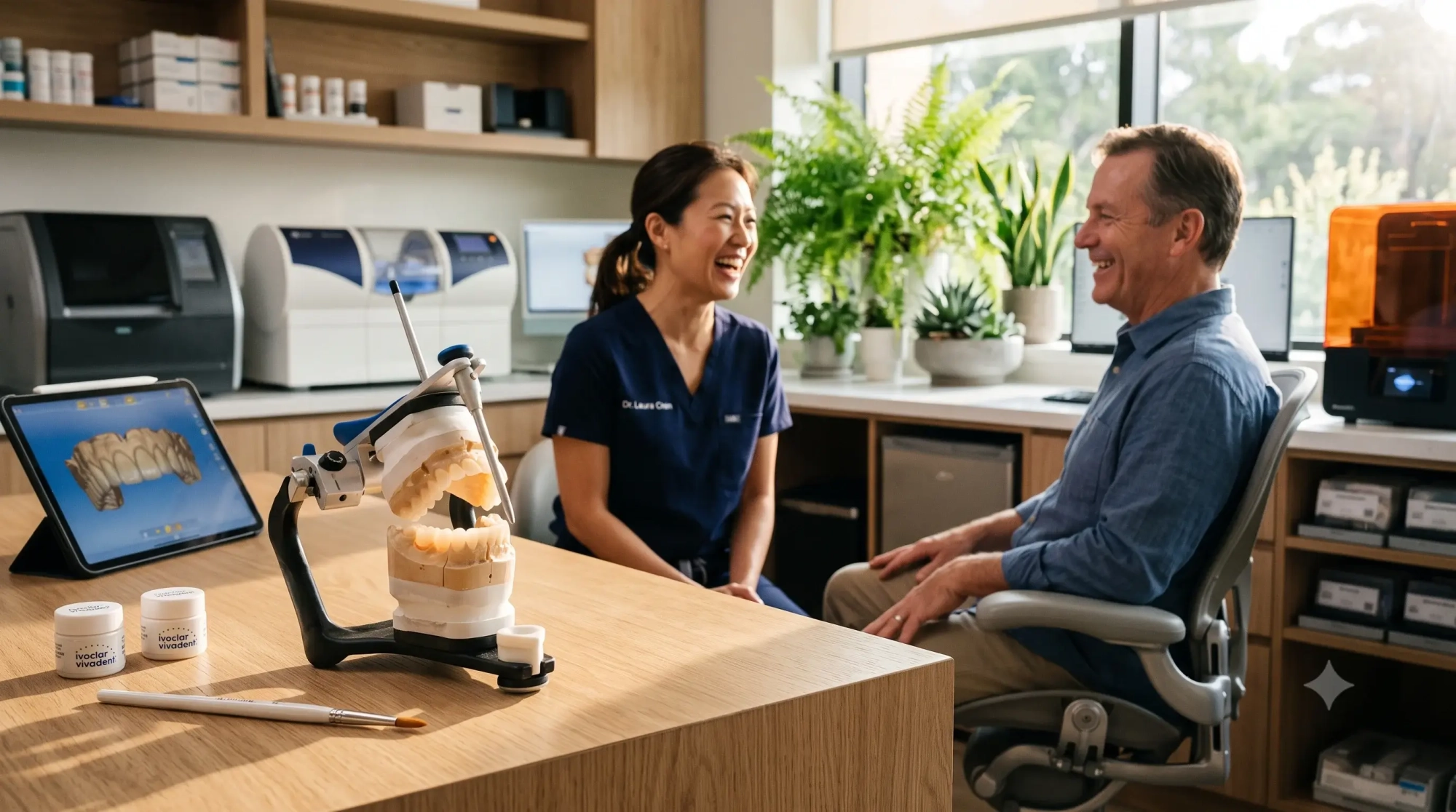
The Shift From Surgical Guesswork to Digital Precision
In the past, rebuilding a smile was a highly subjective process. Dentists relied on physical impressions, manual measurements, and two-dimensional X-rays. This approach often forced clinicians to make adjustments mid-procedure, extending your time in the chair and increasing post-operative soreness. Today, we use 3D CBCT scans to visualize your entire jaw structure, including bone density, nerve pathways, and sinus cavities, before we ever touch a clinical instrument. Standard X-rays compress three-dimensional structures into a flat image, obscuring bone thickness and forcing dentists to make educated guesses during surgery. By contrast, a three-dimensional scan allows us to rotate your jaw digitally, slicing through bone layers virtually to measure the exact width of the alveolar ridge.
This diagnostic clarity changes everything. By mapping your mouth in three dimensions, we eliminate the need for exploratory incisions. We know exactly where the bone is strong enough to support dental implants and where we must avoid sensitive nerves. This level of preparation means that the actual treatment is fast, controlled, and far less invasive than old-school methods. When surgical interventions are planned to the millimeter on a computer screen, there are no surprises during the procedure, which dramatically reduces the physical trauma to your mouth.
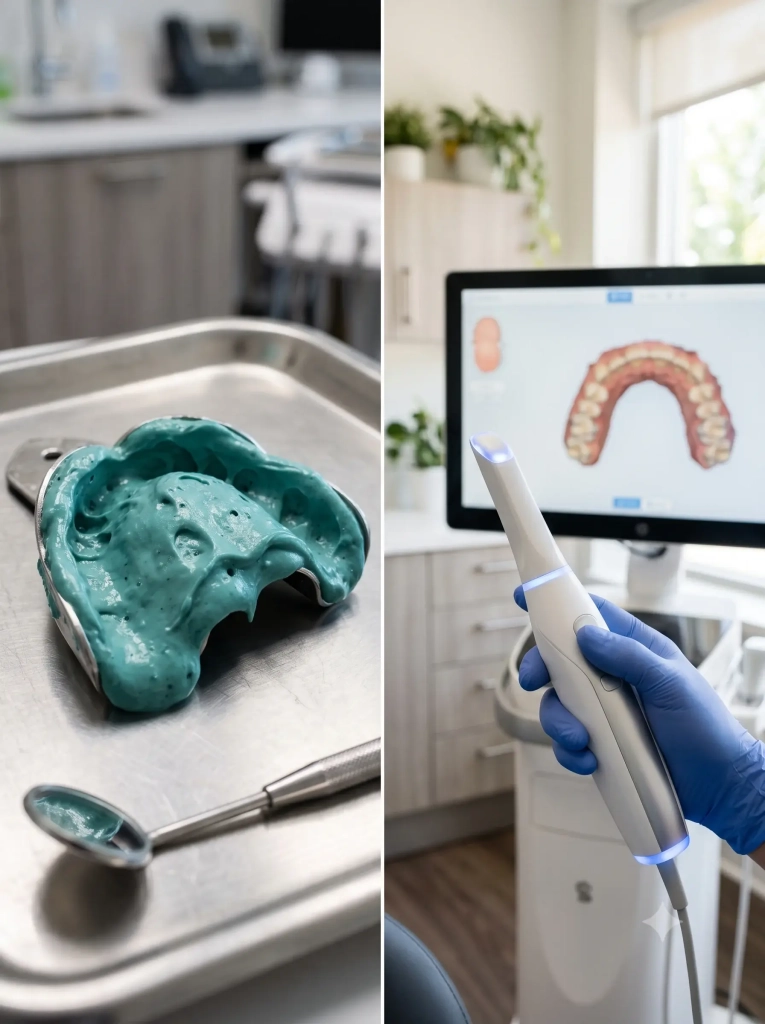
Why do digital impressions feel so different?
The old way of taking impressions involved filling a metal tray with a thick, cold pink paste and holding it in your mouth for several minutes. For patients with a sensitive gag reflex, this was often the most agonizing part of the entire process. Modern intraoral scanners have replaced this step. We use a small, wand-like camera to capture thousands of high-resolution images of your teeth in seconds, creating a highly accurate 3D digital model on a computer screen. This process is clean, fast, and does not trigger your gag reflex, making your initial planning sessions completely stress-free. The digital models are instantly sent to our laboratory, reducing wait times and ensuring a perfect fit for your new teeth.
Can a computer really prevent surgical discomfort?
It absolutely can. Using the digital model of your jaw, we design a physical template called a guided surgical template. This guide fits securely over your gums during the implant placement process, showing us the precise angle, depth, and position for each implant. Because the guide directs our hand with sub-millimeter accuracy, we do not need to cut large flaps in your gum tissue or use stitches to close wide wounds. Minimizing tissue disruption directly translates to less swelling, less bleeding, and a significantly faster recovery period at home. Most patients are able to return to their normal routines the very next day.
How we execute a full mouth rehabilitation without the traditional trauma
Rebuilding your teeth is not just about making them look white and straight. It is a complex engineering task that involves balancing your muscles, bones, and joints. When teeth are missing or severely worn down, your bite collapses, which can cause chronic headaches, neck pain, and jaw joint strain. Through neuromuscular dentistry, we analyze the relationship between your jaw joints and muscles to find the position where your jaw is most relaxed. We then reconstruct your teeth to support this natural position, preventing muscle fatigue and joint pain after your new smile is complete. The jaw joint functions like a complex hinge that moves in three dimensions, and when teeth are worn down, the jaw is forced to close too far, compressing the delicate tissues behind the joint.
By integrating this structural planning with digital smile design software, we can let you see and even test your new bite before we begin any permanent changes. We create temporary, highly accurate models of your proposed teeth that you can wear. This trial run ensures that your final crowns, bridges, or implants will feel natural and comfortable from the moment they are permanently placed. You will not have to go through a painful adjustment period where your muscles fight against your new teeth.
Is it possible to avoid deep bone pain during implants?
A common misconception is that placing implants into the jawbone is an inherently painful experience. In reality, bone tissue has very few pain-sensing nerve endings. The discomfort associated with dental surgery usually comes from the surrounding gum tissue when it is cut, stretched, or sutured. Because we use guided implant surgery to place implants through tiny, precise entry points, we preserve the surrounding gums. Patients are often surprised to find that they only need basic over-the-counter pain relievers for a day or two after their implant placement. By avoiding the trauma of traditional open-flap surgery, we keep the bone and gums happy.
What role does local anesthesia technology play today?
The fear of the dental needle is a major hurdle for many people. To address this, we use advanced, computer-controlled local anesthesia delivery systems. Instead of a traditional syringe, which delivers anesthetic fluid rapidly and creates a painful stinging sensation as tissue stretches, our digital system delivers the numbing agent at a slow, constant, and mathematically controlled rate. This steady flow is below your pain threshold, making the numbing process virtually imperceptible. Once the area is completely numb, you will not feel any pain during your treatment, allowing you to relax completely while we work.
Managing the Psychological Side of Smile Reconstitution
Physical comfort is only one part of the equation: mental comfort is just as important. Many patients in Jamnagar and the Saurashtra region have lived with broken, painful, or missing teeth for decades. Over time, this leads to deep-seated dental anxiety that makes it difficult to even walk through our clinic door. We recognize that dental fear is a real, physical response, and we design our clinical workflows to respect your boundaries and pace. Often, patients in our region rely on temporary home remedies or wait until their pain is completely unbearable before visiting a clinic, which only reinforces their fear of dental visits.
We believe in transparent communication. We show you your 3D scans on a screen, explain exactly what needs to be done, and discuss every option before we begin. Knowing what to expect eliminates the fear of the unknown, which is often the root cause of anxiety. For patients who need extra help relaxing, we offer mild conscious sedation options that keep you calm and comfortable throughout your session, often leaving you with little to no memory of the procedure itself. Our clinic environment, designed with calming tones and quiet treatment rooms, works in tandem with these technologies to make your visit pleasant.
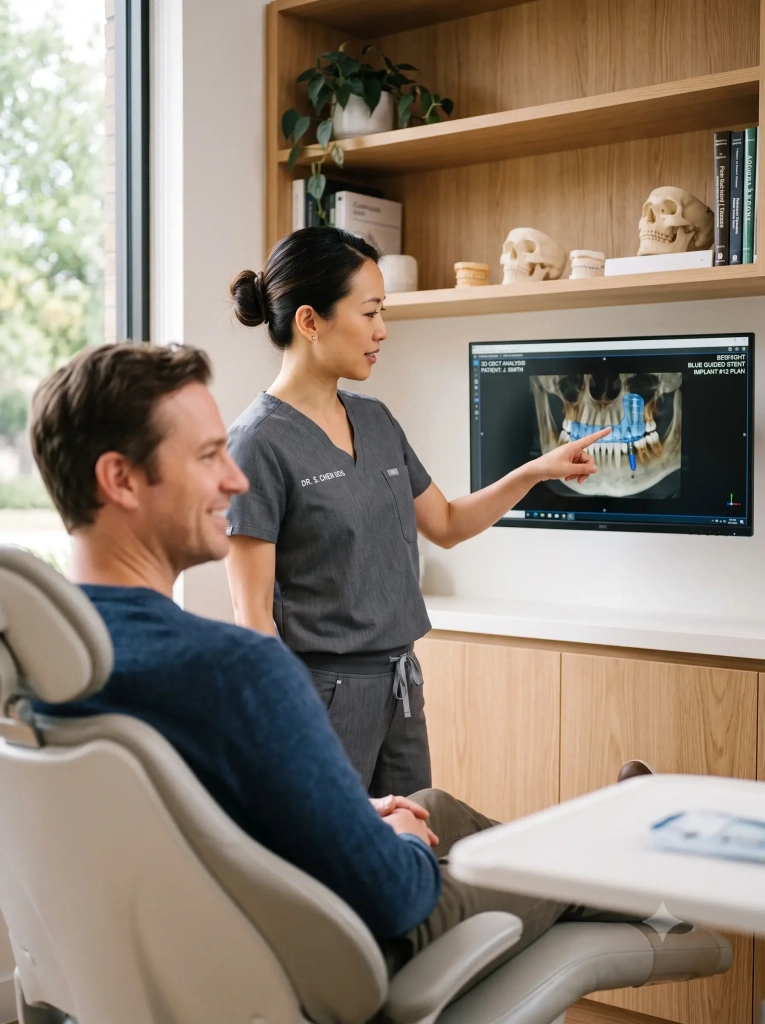
How do you handle extreme dental fear?
For patients experiencing severe anxiety, we do not rush the process. We break your treatment down into smaller, highly manageable steps. Our team focuses on providing a quiet, supportive environment where you control the pace of your appointment. If you need a break at any point, you simply raise your hand, and we stop immediately. This patient-centered control, combined with modern painless dentistry protocols, helps you rebuild your confidence while we rebuild your teeth. We find that once patients experience their first comfortable session, their anxiety for future appointments drops significantly.
Is a full jaw rebuild worth the time and effort?
When you look at the long-term benefits, the answer is clear. Leaving damaged or missing teeth untreated leads to progressive bone loss, poor nutrition, and a collapsed facial structure that can make you look much older than you are. By restoring your teeth, you regain the ability to chew healthy foods, speak clearly, and smile without embarrassment. Modern digital techniques make the process faster and more comfortable than ever, meaning you do not have to put your life on hold to get the healthy mouth you deserve. It is an investment in your overall health, digestion, and self-confidence.
A healthy, functional smile should not require enduring physical trauma. By combining digital planning with gentle clinical techniques, we ensure your path to oral health is smooth and comfortable.
Begin Your Path to a Fear-Free, Healthy Smile
At Nijanand Dental Care, we believe that restoring your teeth should be a deeply reassuring and completely comfortable experience. Let our advanced 3D technology and compassionate clinical team design a gentle, customized treatment plan designed just for you.
Frequently asked questions
How long does a complete mouth restoration process take?
The timeline varies depending on your specific needs, but digital planning has significantly shortened the overall process. While traditional methods could take up to a year, modern computer-guided techniques often allow us to complete the active surgical and restorative phases in a fraction of that time, sometimes even offering temporary teeth on the same day as your implant placement.
Will I be in severe pain after the treatment is completed?
No, severe pain is not a normal part of the modern recovery process. Because we use digital guides to minimize gum incisions and tissue disruption, post-operative discomfort is usually very mild. Most patients manage their recovery easily with standard over-the-counter pain relievers for just a couple of days.
Can I eat normally while undergoing this restoration?
Yes, we provide comfortable, functional temporary restorations while your custom crowns or implants are being fabricated. You will need to stick to softer foods immediately after surgical procedures to allow your gums to heal, but you will never be left without teeth during the process.
Is this treatment suitable for older adults with bone loss?
Yes, advanced age or moderate bone loss does not disqualify you from treatment. Using 3D CBCT imaging, we can identify areas of healthy bone that are invisible on standard X-rays, often allowing us to place implants without the need for complex bone grafting procedures.
How do I get started with my treatment at Nijanand Dental Care?
The first step is a comprehensive digital consultation at our Jamnagar clinic, where we use our intraoral scanners and 3D imaging systems to create a detailed map of your mouth. We then discuss your goals and design a personalized, comfortable treatment plan before any clinical work begins.