
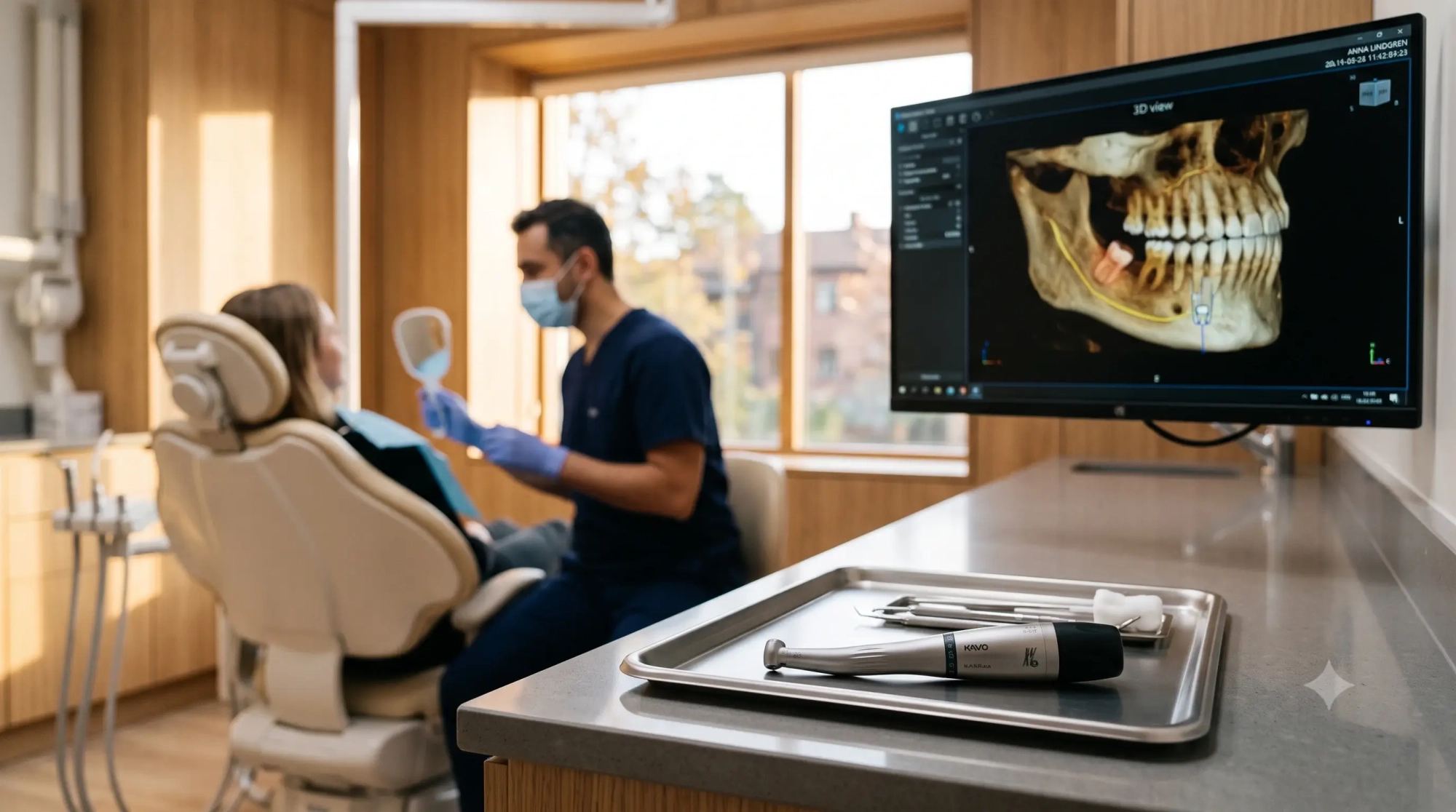
Many patients in the Saurashtra region endure months of jaw stiffness and radiating headaches, convinced that their third molars will eventually find room to grow. This passive approach often backfires, as chronic pressure from an impacted tooth silently erodes the roots of the neighboring healthy second molar. Modern dental advancements have transformed wisdom tooth removal from a dreaded, painful ordeal into a highly managed, comfortable procedure that requires minimal recovery time. By replacing aggressive mechanical force with microscopic precision and advanced imaging, we can now extract compromised teeth with virtually zero intraoperative pain.
If you have been putting off an evaluation because of past experiences, it is time to look at how modern tools have altered the clinical reality. For patients seeking painless dental treatments in Jamnagar, the process is no longer defined by pressure and post-surgical suffering. It is a predictable, streamlined therapy designed to preserve your oral health without disrupting your life.
How diagnostic precision changes the wisdom tooth removal experience
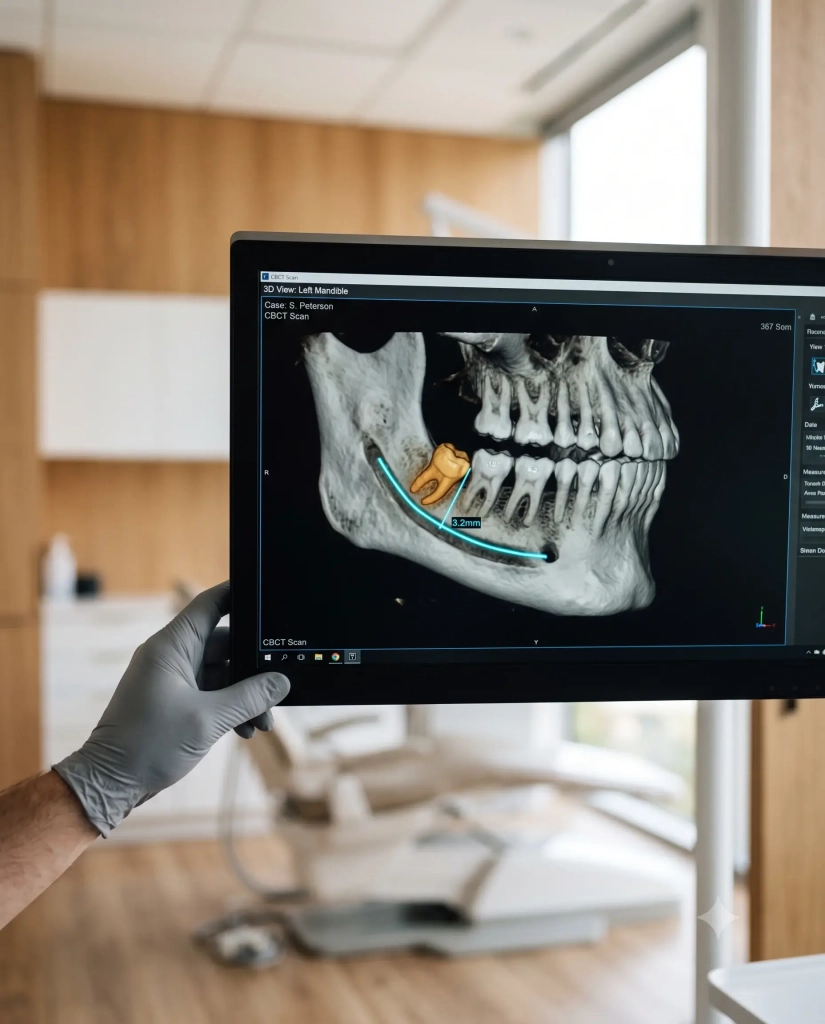
The foundation of a painless extraction lies in what we can see before the procedure even begins. In the past, dentists relied entirely on flat, two-dimensional panoramic X-rays. While these films showed the general position of the tooth, they failed to reveal the exact depth, three-dimensional curvature of the roots, or the precise spatial relationship between the tooth roots and the inferior alveolar nerve. This nerve provides sensation to your lower lip, chin, and teeth, meaning any unexpected contact during surgery can lead to prolonged numbness or discomfort.
With modern diagnostics, we no longer have to make guesses. Our clinic uses Cone Beam Computed Tomography (CBCT) to capture high-resolution 3D images of your oral anatomy. This scan takes less than a minute but provides a complete, clear map of your jawbone, tooth positioning, and nerve pathways. Knowing the exact millimetric position of the nerve allows us to plan a precise path of extraction that avoids nerve contact entirely, reducing surgical risks and minimizing tissue trauma. By utilizing this technology, we ensure that our patients from Jamnagar receive care that is both safe and efficient.
Is a 3D scan necessary for every third molar extraction?
While straightforward, fully erupted teeth can sometimes be managed with standard digital imaging, impacted cases demand the depth of a CBCT scan. When a tooth is trapped beneath the bone or gum line, it is impossible to determine its exact orientation from a flat image. The 3D scan is not a luxury option: it is a safety standard that directly influences how much bone needs to be removed. By visualizing the exact contours of the tooth, we can perform a highly targeted extraction, preserving maximum healthy bone and reducing the physical stress on your jaw.
Can we predict surgical difficulty before making an incision?
Yes, and this predictability is the secret to a painless recovery. By analyzing bone density and root shape, we can categorize the extraction difficulty beforehand. If roots are hooked or splayed, we divide the tooth into smaller, easily removable sections rather than trying to elevate it as a single unit. Planning this sequence reduces chair time and prevents the excessive force that leads to post-operative jaw joint pain. It also allows our team of experienced practitioners to walk you through each step, removing the fear of the unknown.
The mechanics of modern comfort: Tools that replace the hammer and chisel
For decades, the standard method for removing bone around an impacted tooth involved mechanical handpieces or surgical chisels. The vibrations and heavy pressure associated with these tools were the main sources of patient anxiety and physical trauma. Today, we have transitioned to advanced technologies that prioritize tissue preservation and patient comfort. Our commitment is to make sure that the physical sensations of the procedure are minimized, allowing you to remain relaxed throughout your visit.
Does piezoelectric technology make bone cutting gentler?
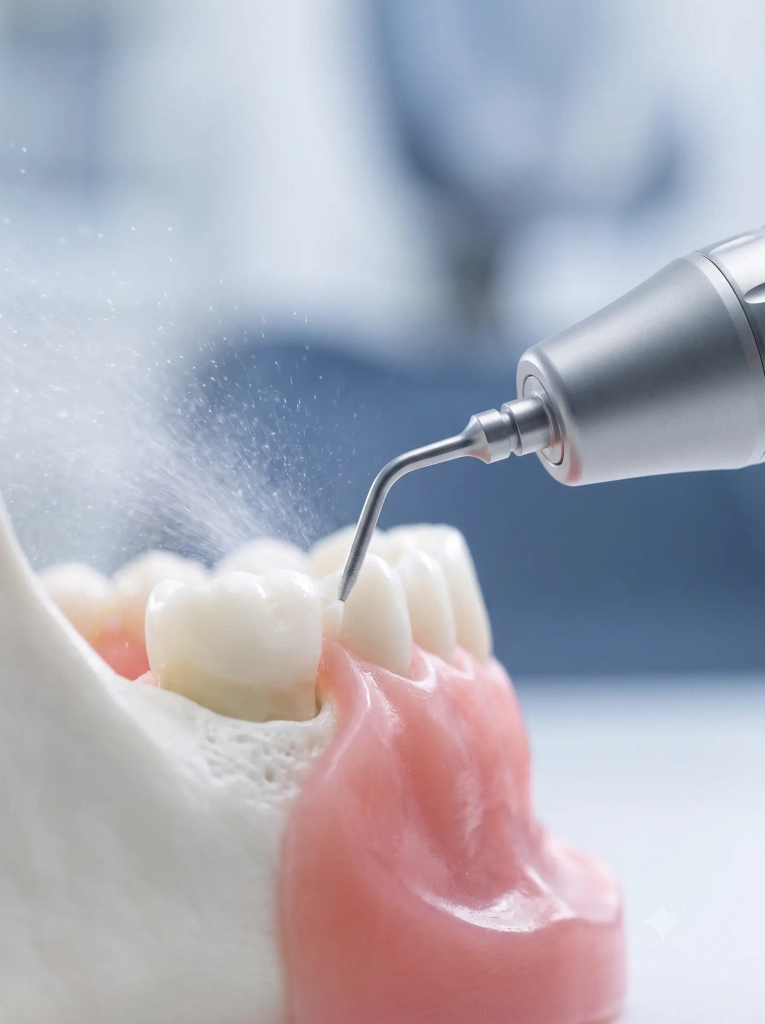
Piezoelectric surgery is one of the most significant advancements in modern oral surgery. Instead of using rotating metal burs that generate heat and friction, a piezoelectric handpiece uses ultrasonic micro-vibrations to selectively cut hard bone tissue. The beauty of this technology lies in its tissue selectivity: the ultrasonic waves only cut mineralized structures like bone, leaving soft tissues, blood vessels, and nerves completely untouched even if direct contact occurs. This eliminates the risk of accidental soft tissue tears, reduces surgical bleeding, and results in dramatically less swelling during the recovery phase. By preserving the delicate surrounding tissues, we can ensure a much smoother and faster healing process.
Is conscious sedation safe for routine dental extractions?
Many patients from Jamnagar and nearby regions like Khambhalia delay their dental visits because of anxiety. For these individuals, local anesthesia alone might not resolve the psychological dread. This is where conscious sedation becomes highly beneficial. By administering mild, controlled sedatives, we put you into a state of deep relaxation while you remain fully awake and responsive. Your perception of time is altered: a forty-minute procedure feels like five. It is an extremely safe, monitored option that makes dental anxiety a non-issue.
For those who prefer a non-sedative approach but dislike traditional injections, we utilize computerized local anesthesia delivery systems. These devices deliver the anesthetic fluid at a constant, slow pressure matching natural tissue absorption. This eliminates the sudden pain caused by rapid tissue expansion, making the numbing process comfortable.
Post-operative healing: Why recovery is faster than it used to be
The surgical extraction is only half the story; the speed of your recovery determines how you judge the overall experience. Traditional healing relied entirely on the body’s natural inflammatory response, which often meant several days of facial swelling, pain management, and a restricted diet of soft foods. Today, we utilize biological therapies to accelerate tissue repair and protect the surgical site from infection. This shift from reactive care to proactive healing has changed the post-operative experience for our patients.
Can PRF speed up your socket healing?
Platelet-Rich Fibrin (PRF) is a natural therapy utilizing your own body’s healing mechanisms to speed up recovery. Before the procedure, we draw a small sample of your blood and place it in a specialized centrifuge to separate the red blood cells from the platelets, creating a dense yellow fibrin clot packed with growth factors. Once the tooth is removed, we place this PRF clot directly into the empty socket.
This natural scaffold accelerates soft tissue closure, protects the exposed bone, and significantly lowers the occurrence of dry socket. By utilizing your own growth factors, we minimize the need for strong post-operative painkillers, allowing most patients to return to their normal routines much faster.
Do modern sutures require painful removal?
One minor but common source of anxiety is the fear of having stitches removed a week after surgery. To prevent this discomfort, we use advanced bio-absorbable sutures that dissolve naturally as your gum tissue heals. These materials are incredibly smooth, reducing irritation to your cheeks and tongue. Our precise suturing techniques also ensure that the wound edges are gently held together without excessive tension, which minimizes swelling and prevents throbbing pain during the first forty-eight hours. This attention to detail ensures that your recovery is as quiet and comfortable as the procedure itself.
“The fear of dental procedures is almost always rooted in outdated memories. Modern dental technology has shifted the focus from force to finesse, ensuring that patients leave the clinic wondering why they waited so long to seek treatment.”
Take the first step toward a pain-free smile
Delaying necessary dental care out of fear only increases the complexity of the treatment down the road. If you are experiencing jaw pain, swelling, or localized discomfort in the back of your mouth, it is time to consult an expert. At Nijanand Dental Care, we combine advanced diagnostic imaging, ultrasonic surgical tools, and customized comfort protocols to make your wisdom tooth removal a smooth, stress-free experience. Our team is dedicated to providing the highest standard of dental care to patients throughout Jamnagar and the wider Saurashtra region.
Frequently asked questions
We understand you may still have questions about your upcoming dental visit. Here are some of the most common queries we receive from our patients in Jamnagar.
How long does the actual extraction process take?
A standard extraction typically takes between twenty to forty minutes per tooth. The exact duration depends on the positioning of the tooth and whether it is fully erupted or deeply impacted under the bone. Our pre-surgical 3D imaging helps us plan every step in advance, which keeps your time in the chair as short as possible.
Will I feel any pain during the procedure?
No, you should not feel any pain during the procedure. We use advanced local anesthetics to completely numb the tooth and the surrounding tissues. While you may feel some mild pressure as the tooth is gently loosened, the modern tools we use prevent any sharp sensations. We also offer sedation options to keep you relaxed.
What is the ideal age to get third molars evaluated?
The best time for an evaluation is between the ages of seventeen and twenty-one. During this window, the roots of the teeth are not fully formed, and the surrounding jawbone is less dense, making any necessary extraction much simpler and faster to heal. A quick diagnostic scan can help us predict if they will cause issues in the future.
How soon can I return to my normal routine?
Most patients can return to light daily activities and work within one to two days. If your procedure involved advanced bone removal or multiple impacted teeth, we may recommend resting for forty-eight hours. Using advanced healing therapies like PRF significantly reduces downtime and accelerates your return to normal life.
What should I eat during the first few days after surgery?
For the first twenty-four to forty-eight hours, stick to soft, cool foods that do not require heavy chewing. Excellent choices include yogurt, smoothies, mashed potatoes, and lukewarm soups. Avoid hot liquids, spicy foods, and using straws, as the suction can disturb the healing clot in the socket.